Answering service for plumbers that books the job
Forward your line after hours, on weekends, or when the office can't pick up.
3 days free, then from $149 a month. Cancel before day 4 and nothing is charged. During the 3-day trial: 150 minutes, up to 8 minutes per call. Call the demo line: (973) 791-7808
DispatchLine answers your plumbing line around the clock, sorts a burst pipe from a slow drain in the first minute, gives the caller the shutoff instruction before anything else, and books the job into an arrival window on your board. Emergencies alert your on-call tech. Every call lands in your portal with a recording, a transcript and a two-line summary while recording is on.
What an AI receptionist for plumbers handles when it answers
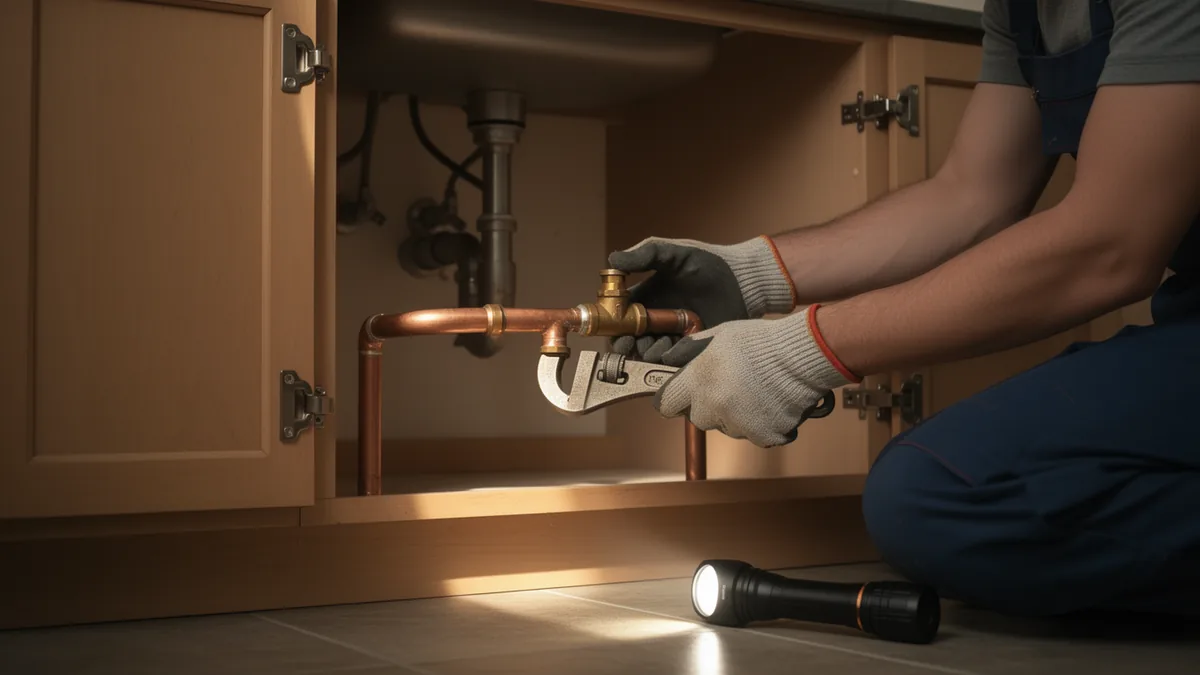
Your agent runs a plumbing script, not a generic call-center template. It answers your forwarded line around the clock, tells every caller at the start that it is an automated assistant, and sorts a flooded basement from a slow drain in the first minute. On an emergency it gives one safety instruction first when one fits, then books the job into an arrival window on your board.
Emergency plumbing calls, safety instruction first
You set the emergency keywords and the emergency action in the portal; the after hours answering service page has the rules. On the calls plumbers actually get at night:
- Burst or leaking pipe: walks the caller to the main shutoff, confirms the water has slowed, books the emergency window and alerts your on-call tech.
- Sewage backup: it is on the emergency keyword list out of the box, so the agent flags it as an emergency and books it. To have it tell the caller to stop running water anywhere in the house, add that line to your extra safety instructions in the portal.
- No hot water: asks the heater’s age and fuel type, gas or electric, so your tech arrives with the right parts. Out of the box “no hot water” is an emergency keyword, so these calls are treated as emergencies until you take that phrase off your list in the portal.
- Gas smell near a water heater: tells the caller to leave the building and call the gas utility’s emergency line from outside, before taking any details.
- Frozen pipes in the first freeze: add a question like “has anything split?” and the agent asks it. A burst pipe gets the shutoff instruction and the earliest emergency window. A frozen pipe that has not split is not on the default emergency list, so add “frozen pipe” to your keywords if you want those booked as emergencies. The first-freeze playbook shows how to set the rules before the cold snap.
- Sump pump failure in a storm: “flooding” is an emergency keyword out of the box, so a flooding basement gets the earliest emergency window. Add a question like “is the water rising now?” and the agent asks it.
- Slab leak: a warm spot on the floor or a meter that spins with everything off. Not a shutoff-and-run call, but it gets the next window and a note for your tech.
Routine work, booked without you
Drain cleaning is the volume job, and the agent books it the way you would: it quotes your service-call fee or flat drain rate from your business facts when price comes up, offers two arrival windows from your board, and takes the name, phone and address. Water heater replacement quotes get the age and fuel type, plus tank size and location if you add those questions, then a booked visit; the agent does not guess a price. Re-pipes are the big ticket, so those get a booked site visit, with the call summary in the portal for when you call the customer to walk the job. The customer gets a text confirmation from the shared DispatchLine messaging number that names your business, when they agree to a text on the call.
The triage questions it asks
The agent works through a question list you control in the portal: add, reword, reorder or delete any question without opening a ticket. It reads the phone number and address back, because one transposed digit is a hole in the schedule. Out of the box a plumbing line asks four questions: the caller’s name, the service address, where the leak or problem is and whether the water is shut off, and whether the water heater is gas or electric and roughly how old. A fuller list you build might look like this:
- What’s the address where you need service?
- Is water actively leaking or backing up right now, or can this wait for the next available window?
- Briefly, what’s happening?
- Have you found the shutoff, and is the water slowing down?
- For a water heater: how old is it, and is it gas or electric?
- Is this a house, condo or commercial property? (access and shutoffs)
- What’s the best name and number to reach you at when the plumber is on the way?
Anything outside the facts you wrote, the agent says the office will confirm. It does not fill the gap with a guess.
What makes a plumbing call dispatchable
“Bob, water problem, call him back” is homework, not a job. Put running water and the shutoff ahead of the name. The main shutoff is often in the basement or crawlspace on the street side, a meter box near the curb in warmer regions, or a utility closet in a slab house. Then add the questions that change the truck you send:
- Clean water or sewage: different job, gear and price.
- One fixture or all: every drain backing up, lowest fixture worst, points at the main line.
- Access: who will be home, unit, gate or lockbox code, dogs.
A sample after-hours call
Riley is the default agent name and the shop is fictional. This is the 11 PM Saturday call.
Riley: This call is answered by an automated assistant and may be recorded. Thanks for calling Mill Creek Plumbing, this is Riley. How can I help you today?
Caller: There’s water pouring out of the ceiling in my hallway.
Riley: Let’s stop the water first. Do you know where your main shutoff is?
Caller: I think it’s in the basement by the front wall.
Riley: Go there now and turn the valve clockwise until it stops.
Caller: Okay. It’s slowing down.
Riley: Good. What’s the address?
Caller: 418 Larkin Avenue.
Riley: Got it, 418 Larkin Avenue. What name and number should the plumber ask for?
Caller: Dana Ruiz, 555-0142.
Riley: That’s 555-0142. This is an emergency, so our on-call plumber will call you back within 15 minutes. The earliest window I can book is tomorrow, 7 to 9 AM. Shall I book it?
Caller: Yes, please.
Riley: Is it okay if I text the appointment confirmation to this number? You can reply STOP any time to stop the texts.
Caller: Sure.
Riley: You’re booked, Dana. Keep the water off until he calls.
On your side, the emergency slot is on the board, your on-call tech has the alert by email, and the recording, transcript and summary are in the portal about a minute later. Windows follow your hours; on a closed day, emergencies can still book from 7 AM to 9 PM, and no slot is held back. Text alerts to your team are optional and need each member’s opt-in. Prefer to take these calls yourself? Set the emergency action to live transfer instead.
When plumbing calls go unanswered
The person who could answer is the one under the sink. Your hands are wet, the phone is in the truck, and a caller with water on the floor does not leave a voicemail. They call the next listing. Invoca, a call-tracking company that also sells AI voice software, reported in July 2026 that 52% of calls to the home-services businesses on its platform, plumbing among them, were answered by a person (Invoca, 2026). That is their data, not ours. After 6 PM the problem is simpler: nobody could pick up at all.
Plumbing makes it worse because the calls arrive in clumps. The first freeze brings a wave of split pipes in one night. Holiday weekends bring a full house, a heavy disposal and a backed-up main line while the office is closed. Spring rains bring sump pump failures, ten in the same storm. Those are the after-hours plumbing calls that pay emergency rates, and they are the ones you miss most, because everyone is calling at once. Why a one-truck plumbing shop can miss half its calls walks through the pattern in more detail.
Where a plumbing shop’s calls go missing
Sort a month of missed calls from your carrier log by hour, then check four stretches first:
- 7 to 8 AM: overnight leaks call while the crew loads.
- 11:30 to 1: lunch, and you are on with a supply house.
- 4 to 6 PM: people get home while you close out tickets.
- Nights and weekends: fewer calls, more of them urgent.
The first three are capacity problems: conditional forwarding on busy and no answer catches them while your phone still rings first. The fourth needs everything forwarded after hours.
What a plumbing answering service costs against missed calls
Use your own numbers, not ours. Say your phone rings 30 times a week and you or the office catch 18. That leaves 12 missed calls. Suppose only 4 of the 12 would have booked, and your average ticket across drain cleaning and small repairs is $350. That is 4 times $350, or $1,400 a week, and about $6,000 a month walking to the next listing. Put your own ticket in and the shape does not change. The missed-call calculator runs the same arithmetic on your inputs.
Against that, the first 3 days are free, and after them One Truck is $149 a month for one or two trucks, Crew is $299 for three to six and Fleet is $549 for seven or more trucks or more than one location. There is no per-minute charge on any of them. As an illustration only, the fair-use guidance for One Truck, 800 answered minutes a month, is roughly 267 to 400 calls of 2 to 3 minutes each, which is useful for sizing a plan and is not a bill: there is no per-minute charge. Every plan has every call-handling feature, month to month; Fleet adds several locations, set up with our team. Full details are on the pricing page, and the first-month guarantee is spelled out in the refund policy.
Billing questions to ask before you sign
The billing unit decides the bill, so get these in writing from any vendor, ours included, and model a freeze month:
- Per minute or per call, and whether hold time, spam, wrong numbers and hang-ups bill.
- Setup charges, contract length and minimums.
- Overage terms.
- What leaving costs, and what happens to your recordings.
One truck or five: how the trial and the plans fit
Start with the 3-day free trial
Sign up online. There is no application and nobody approves you, so any US plumbing shop can start today. A 15-minute setup wizard takes your greeting, hours, service area and emergency rules, you add your flat rates in the portal, and you start the trial with a card on file. Nothing is charged until day 4, and you can cancel from your billing page before then. Canceling during the trial ends it at once and the agent stops answering. We build the agent and buy you a local number, then you press Test call and the agent phones you, so you hear it work before a customer does. Once that call is done the number starts answering and the forwarding steps unlock. The trial runs 3 days and 150 minutes, with up to 8 minutes on any one call; when the minutes are gone the agent answers with a short line saying the line is paused rather than running up a bill. Setup help comes by email from support@getdispatchline.com, with a reply inside one business day.
Five test calls in the first week
Before you trust a virtual receptionist for your plumbing line with customers, forward on busy and no answer only, and make five calls yourself:
- An ordinary booking with a gate code.
- A gas smell.
- A sewage backup.
- A price question outside the rates you wrote.
- A wrong address that you then correct.
Grade results, not conversation: a booked window with the gate code, and an emergency alert that reached the right person. More in testing an AI receptionist before you buy.
A one-truck owner-operator
You are the dispatcher, the tech and the estimator. The fix is after-hours plus overflow: forward your line to the agent after the last job, and set conditional forwarding so a daytime call you cannot reach rolls to the agent after four rings instead of voicemail. One Truck is the natural place to begin; the forwarding guide has the carrier steps.
A five-truck shop
Someone is on the phones from 7 to 5. The misses come at 6:15 PM, on Saturdays, and on a freeze morning when three lines light up at once. Run the agent as overflow during the day, catching what the office cannot reach, and as full coverage nights and weekends. Crew is the plan to start from; Fleet is the plan for seven or more trucks or a second yard. No plan has a per-minute charge.
Two to ten trucks: hire a CSR or buy coverage
At this size, compare coverage against hiring a customer service rep (CSR). This illustration assumes $20 an hour; use your local rate.
| Option | Monthly cost | Hours of the week covered |
|---|---|---|
| Part-time CSR, 20 hours | about $1,866 | 20 of 168 |
| Full-time CSR, 40 hours | about $3,732 | 40 of 168 |
| DispatchLine, any plan | $149 to $549 | All 168, no per-minute charge |
The seat math: 20 hours × $20 × 52 weeks ÷ 12 months = $1,733 in wages, plus the employer’s 7.65% for Social Security and Medicare (IRS Topic 751), $133, for about $1,866. Forty hours is $3,467 plus $265, about $3,732, before workers’ comp, unemployment tax, a phone or sick days.
On the phone alone, at these numbers, the seat loses. The crossover is when you would hire anyway for the board, permits, warranty paperwork and collections: then the daytime phone comes nearly free and coverage shrinks to nights and overflow. A daytime hire does nothing for a 2 AM call.
What the agent will not do
- Quote a price it was not given. It reads your service fee and flat rates from the portal and says the office will confirm anything else.
- Diagnose the problem or promise a fix. It books a plumber to look.
- Promise an arrival time that is not on the board.
- Take a payment or a card number.
- Text a caller who did not agree to a text on the call.
- Claim to be a person. Asked, it says it is your automated assistant and offers a human callback.
- Skip the safety instruction. Smoke, fire or a CO alarm gets “leave the building and call 911” before anything else, and a gas smell gets “leave the building and call the gas utility’s emergency line from outside.”
Google Calendar sync and a Jobber connection are in development; Housecall Pro and ServiceTitan connections are planned. Today appointments live on the portal board, call history exports to CSV, and a weekly report comes by email on Monday.
Live operators, AI or your own on-call rotation
Three different products get sold as an answering service for plumbers:
- A live call center is people with a script on a screen, and the good ones are very good with a distressed caller. But you get whoever is on shift, and in a cold snap your callers can queue behind other companies’ callers.
- An AI answering agent, which is what DispatchLine is, runs your intake and books into your windows the same way at 3 AM as at noon. It does not read a caller’s mood, sell, or talk anyone down.
- An in-house on-call rotation costs on-call pay and goodwill with your techs, and degrades quietly: the third night of 1 AM robocalls is when nobody answers.
Ask any vendor how many calls it answers at once. Buy people outright for commercial and property management work, where one caller has three addresses and a work order to negotiate, or for callers who need a human voice to stay on the line. Software can be calm and clear. It cannot be kind in the way that matters there.
Where a human dispatcher still matters
If you have a full-time dispatcher who routes five trucks by neighborhood and talks a landlord through re-pipe versus repair, the agent does not replace her. It cannot decide which truck is closest, negotiate a price, or remember which property manager pays late. What it does is take the ring she cannot reach: the second line on a freeze morning, the 6:30 PM call after she has gone home, the Sunday backup. Those land on the board for her Monday morning, with a recording while recording is on (the default).
If you already pay a plumbing answering service, run both for a month. Forward the overnight hours to the agent, keep the service on the rest, and compare the two call logs. The agent triages, gives the safety instruction and books into your board; a service takes a message. AI receptionist versus answering service lays it out side by side, and how it works follows one call from ring to booking.
A plumbing dispatcher script for your own office
If a person on your team answers the phone, this is the order that turns a call into a job a plumber can drive to. Change the shop name, keep it by the phone, and use the same order on every call.
- Greeting: “Thanks for calling [shop], this is [name]. Is water leaking or backing up right now?”
- Safety first: if water is running, “Let’s stop the water first. Do you know where your main shutoff is?” If the caller smells gas, “Please leave the building now and call the gas utility’s emergency line from outside. We’ll take your details after that.”
- Address: “What’s the address where you need service?” Read it back, unit number included.
- The problem: “Briefly, what’s happening, and when did it start?” Then ask what changes the truck: clean water or sewage, one fixture or every drain, and for a water heater its age and whether it is gas or electric.
- Access: “Is this a house, a condo or a business? Who will be there, and is there a gate code or a dog?” If the caller rents, ask who approves the work.
- Callback number: “What name and number should the plumber call on the way?” Read the number back digit by digit.
- The window: offer a real arrival window from the board, never “first thing” or “soon”. On an emergency, say who will call back and how soon, using only the times your on-call plumber has agreed to.
- Price questions: quote only the service-call fee or flat rates the owner has approved. Everything else is “the plumber will confirm that on site”.
- Close: repeat the window, the address and the next step: “The plumber will call when he’s on the way. Keep the water off until then.”
Safety, address, problem, access, number, window: whoever answers, keep that order. The answering phone calls script covers the everyday calls, the HVAC phone script does the same for heating and cooling, and DispatchLine’s agent asks the same kind of questions on the calls your office can’t reach.
FAQ
Can it give a price over the phone?
Only the prices you’ve written into your business facts, like a service-call fee or a flat drain-cleaning rate. It never estimates a repair or guesses a water heater or re-pipe price.
What if the caller is outside my service area?
It says so politely and offers to take a message. You set the areas by town, county or ZIP in the portal and can change them any time.
Can it transfer an emergency straight to me?
Yes. Choose “transfer live” as your emergency action and give it a number. If the transfer does not connect, it takes the caller’s details and says your on-call tech will call back within 15 minutes.
What does it say when someone smells gas near the water heater?
It tells the caller to leave the building and call the gas utility’s emergency line from outside, before anything else. Only then does it take a name and number. Smoke, fire and a CO alarm get the same rule, with 911 as the number to call.
Does it text the customer a confirmation?
Yes. Text confirmations are included, from one shared DispatchLine messaging number that names your business, and only to callers who agreed to a text on the call. The window is read back on the call as well, and your booking alerts come by email.
Does it work with Jobber, Housecall Pro or ServiceTitan?
Not yet. A Jobber connection and Google Calendar sync are in development, and Housecall Pro and ServiceTitan are planned. Today the appointments are on the portal board, and call history exports to CSV.
When does the number start answering my calls?
After your test call. Once the agent has phoned you and you have heard it work, the number starts answering and the forwarding steps unlock. From there you choose what reaches it: forward the line when you leave the last job and take it back in the morning, or set conditional forwarding so it only catches the calls you do not answer.
Will callers know they are talking to an AI?
Yes. Every call starts with one sentence saying it is answered by an automated assistant, and that it may be recorded when recording is on. If a caller asks, it says it is your company’s automated assistant and offers a callback from a person.
Does it speak Spanish?
Not today. The agent answers in English only, in one of four American English voices. Answering Spanish-speaking callers has a routing plan you can set up this week.
Can I listen to calls live?
No. The portal does not let you listen while a call is in progress. When recording is on, the recording, transcript and two-line summary are in the portal about a minute after the call ends, and you can play the call back there. If you want a person on emergency calls, set the emergency action to live transfer to a number you choose.
Guides for plumbing companies
- Plumbing Pricing: How to Set Rates That Cover CostsBuild a plumbing rate from wages, payroll taxes, truck, overhead and billable hours, then turn it into flat prices.
- First-freeze playbook for plumbersSet up your DispatchLine line the evening before the first hard freeze: keywords, safety lines, hours and alerts, then what to check the…
New field guides by email
Guides for home-service businesses on answering calls, call triage and after-hours coverage: the title, a short summary and a link for up to six of the newest guides on this site. At most one email every 30 days.