Answering Service for Water Damage Restoration Calls
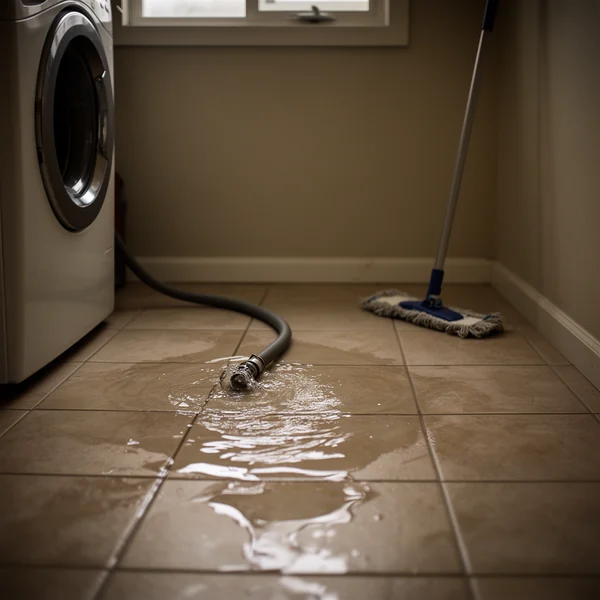
A woman calls at 11:40 on a Sunday night. There is an inch of water across her finished basement, the ceiling under the upstairs bathroom is sagging, and she is standing in it in bare feet with the phone in her hand. Whoever picks up has about forty seconds to do the two things that matter, and neither of them is booking a job.
Restoration is the one trade where the phone call is part of the emergency response. In plumbing the phone gets a truck moving. Here it also has to keep somebody from being electrocuted, and it has to start a clock that is already running.
Safety comes before the address, every time
The caller is standing in the loss. That changes the order of everything.
- Standing water and electricity. Do not walk into water in a room with live outlets, submerged cords or a panel at floor level. Kill the main only if the panel is dry and reachable without crossing the water. If it is not, the utility gets the call, not the customer’s own hand.
- A sagging or bulging ceiling. Stay out of that room and keep everyone out. A saturated drywall ceiling holds a lot of weight and does not warn you before it comes down.
- Sewage. Everybody out of the affected area, especially children and anyone with a compromised immune system. Do not let the caller start cleaning it with a mop and a bucket. This is a category the crew handles with protective equipment.
- A burning smell, or water reaching a furnace or water heater. Leave the building and call 911 before anything else. Our agent does this automatically on gas, smoke, fire or a carbon monoxide alarm, and it is not something an owner can script away.
- Is the water still coming in. Get them to the shutoff. Everything after this is cheaper if the source stopped five minutes ago.
Only once those are handled does the intake start. An agent that opens with what is your street address, while the caller describes a ceiling coming down, has failed at the part that mattered.
What an answering service for water damage restoration has to do differently
Two structural things separate this from every other trade on your street.
The first is the clock. The industry standard restorers work to, the IICRC S500, describes clean water degrading into worse categories as it sits and contacts building materials, and it treats time and temperature as the drivers. Nobody needs a statistic to see the mechanism: wet organic material in a warm closed space is a growth medium, and a call answered at midnight instead of at eight in the morning is a smaller job, a smaller invoice dispute and a smaller chance of a mold conversation later.
The second is that restoration is a race. The homeowner is calling names off a search page in order, and the first company that answers, sounds competent, and gives an arrival time usually gets the job. There is no callback culture here the way there is in remodeling. A voicemail at midnight is a lead you gave to a competitor.
Which is why coverage in this trade is not really about convenience. It is about being the one that picked up. Run the arithmetic on your own average mitigation invoice rather than a repair ticket, because the number is much larger and it changes the answer. The missed-call calculator takes whatever figure you put in.
The intake that lets you load the right truck
Restoration dispatch is an equipment decision, not just a scheduling one. How many air movers, which dehumidifiers, whether the crew needs protective equipment, whether an extraction unit is coming. All of that is decided by what comes off the phone.
- Source of the water. Supply line, drain, appliance, roof, storm, sewer backup, sump failure. Clean, gray or black follows directly from this.
- Is it still running, and has the source been shut off.
- How many rooms and how many floors. Ask about the level below, because water travels down and callers report only what they can see.
- Flooring and materials. Carpet with pad, hardwood, laminate, tile, finished basement. Laminate and engineered wood behave badly and change the plan.
- Is the ceiling involved, which is both a safety question and a scope question.
- How long has it been wet. Discovered this morning after a week away is a completely different job from happened twenty minutes ago.
- Is there power to the area, and is the building occupied tonight.
- Who owns the property. Owner, tenant, landlord, property manager, HOA. A tenant cannot authorize mitigation, and finding that out on site wastes a night crew.
- Insurance carrier, claim number if one exists, and whether an adjuster has been contacted. Capture it, and do not let anyone on your phone tell the customer whether their policy covers it. That is the carrier’s decision and a promise about it is a liability.
- Access. Gate codes, dogs, where a truck can park, whether the street floods.
Ten items and it still runs in about two minutes once the safety piece is done. Whether a person or software collects them is less important than whether they are collected identically at midnight and at noon.
Where a live human service is genuinely better
This trade has the strongest case of any for real people on the phone, and it deserves saying plainly. A frightened homeowner at midnight sometimes needs somebody to stay on the line with her while she finds the breaker panel. A large commercial loss needs a person who can talk to a facilities manager about four floors and a fire panel. Software is calm and consistent and it is not company.
What software is better at is being awake, handling four simultaneous calls during the freeze event that generated all of them, and doing the safety script identically on call number thirty. Storms are exactly when human answering desks are overloaded, and they are when your phone rings most. Many restoration shops run both for that reason, and there is nothing wrong with that answer. How the agent handles a call lays out where the handoff to your on-call project manager happens.
Set it up before the season, not during it
Write your portal facts now: service area, what your emergency response time honestly is at 2am in February, your protective-equipment policy on category three, which carriers you are a preferred vendor for, and the one sentence you want said about billing before an adjuster is involved. Anything you have not written down, our agent will not invent, and it will say the office will confirm instead. Setup is a 15-minute wizard and a Test call, with support by email at support@getdispatchline.com and an optional WhatsApp chat at +1 (814) 808-0593, but even that is a poor thing to be arranging during a freeze. The rest of the setup material is in the Knowledge Center, and the after-hours side is covered in the after-hours guide.
FAQ
What should the phone tell a caller standing in water?
Do not walk through it if there are live outlets, submerged cords or a panel near the floor. Cut power at the main only if the panel is dry and can be reached without crossing the water, and otherwise call the utility. Safety instructions come before name, address or anything else.
How fast does a water loss have to be answered?
Faster than the competitor the homeowner calls next. The practical constraint is not a published deadline, it is that a wet building keeps getting worse and the first company to answer usually gets the job. That combination is why overnight coverage pays for itself in this trade more than in most.
Can an answering service tell a customer whether insurance will cover it?
No, and neither should you. Capture the carrier, the claim number and whether an adjuster has been contacted, and say the office will confirm the rest. A coverage promise made on the phone at midnight becomes an argument at the end of the job.
What information does a restoration crew need before it rolls?
Source of the water and whether it has stopped, category of water, rooms and floors affected, flooring type, whether the ceiling is involved, how long it has been wet, occupancy, who owns the property, and access details. Those decide the equipment on the truck, not just the schedule.
Should an AI handle a distressed caller?
For the safety script and the intake, yes: it is given the same written instructions on every call. For a frightened person who needs somebody to stay with her, a human is better and it is worth having one in the ladder. Alert your on-call project manager and let a person call back.
What about a sewage backup specifically?
Everyone out of the affected area, no mopping, and no children or immune-compromised occupants anywhere near it. Flag it on the ticket so the crew arrives with protective equipment rather than discovering the category at the door.
New field guides by email
Guides for home-service businesses on answering calls, call triage and after-hours coverage: the title, a short summary and a link for up to six of the newest guides on this site. At most one email every 30 days.